Washington DC with kids: the city where the free museums are the best ones
DC's Smithsonian museums are free, world-class, and built for children. Here's how to use them, and the four-day plan that doesn't burn out before the Lincoln Memorial.
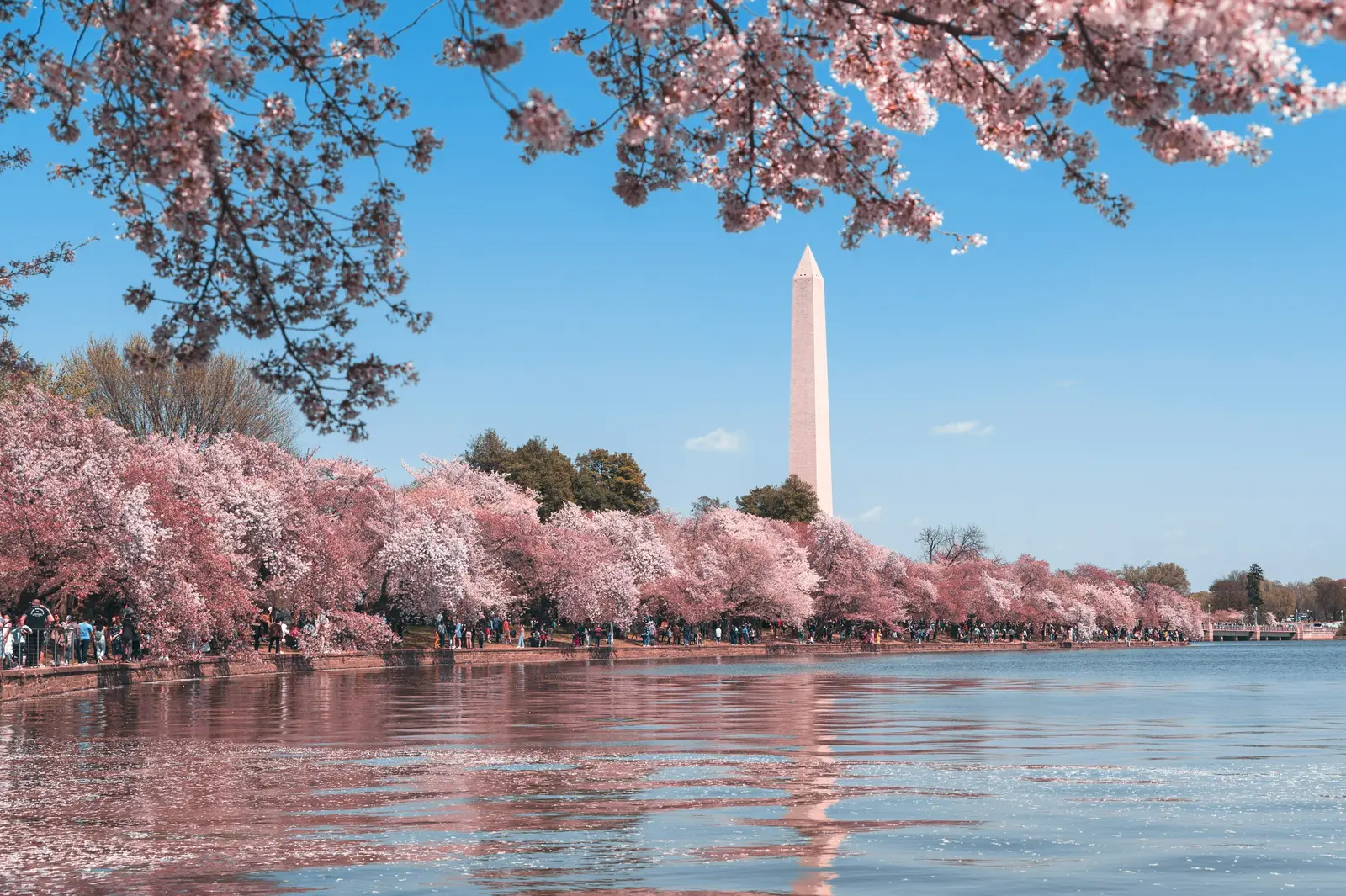
Washington DC is the best free city for families in the United States, and it's not close.
The Smithsonian Institution runs 19 museums in DC, all with free admission. They include the Air and Space Museum (consistently ranked as the most visited museum in the world), the Natural History Museum, the American History Museum, the African American History and Culture Museum, and the National Portrait Gallery. All free. Add the monuments on the National Mall, the National Zoo, and the Cherry Blossoms, and you have a city where the problem is not finding things to do but deciding which things to skip.
The challenge with DC and families is not finding good things. It's not overloading a day. The museum buildings are large enough that parents with ambition tend to sign up for too much. Here's what to do instead.
One rule: one museum per day
This is the difference between a good DC trip and a death march. Each Smithsonian museum is a full half-day commitment if you do it well. Two museums in a day with kids under 12 results in rushing the second and finishing the day without enjoying either. One museum, done at your pace, with a lunch break and time to revisit the good sections.
The monuments are the exception: the National Mall circuit can be done in an afternoon. But every other day has a museum as the anchor and one secondary thing, not two museums and a monument.
Four anchors for a first trip
1. National Air and Space Museum
For most families, this is the opening day. The Air and Space Museum on the National Mall holds the Wright Brothers' original Flyer (the actual one, not a replica), Charles Lindbergh's Spirit of St. Louis, an Apollo 11 command module, and an SR-71 Blackbird, all hanging from the ceiling or positioned at floor level close enough to touch the glass. It's the most direct answer to "how did we get to space" available anywhere in the world.
The main building is currently undergoing renovation (completing 2026), meaning some galleries have shifted. The Steven F. Udvar-Hazy Center (the overflow facility near Dulles Airport, about 45 minutes from downtown by car) is where the Space Shuttle Discovery lives, along with the Concorde and a B-29 Superfortress. If you have a car day, the Udvar-Hazy Center is the stronger museum experience purely on scale.
For the main Mall location: plan three hours. The Space Race gallery, the planet and moon section, and the Albert Einstein Planetarium shows are the main draws for ages 6+. The planetarium requires a separately ticketed (but modestly priced) show purchase; book in advance for peak season.
2. National Museum of Natural History
The Natural History Museum is the family museum that holds up across the widest age range, from 3 to 14 without exception.
The anchors: the dinosaur hall, reopened in 2019 with a new mounted T. rex (smaller than New York's, but in a better-lit and better-explained gallery), the Ocean Hall with a 45-foot blue whale model, the Hope Diamond in the Janet Annenberg Hooker Hall of Geology, and the live butterfly pavilion (small additional charge, usually around $7 per person, absolutely worth it: warm, humid, tropical butterflies landing on your kids' arms while you're standing in December in Washington).
The Hope Diamond earns its own paragraph. It is a 45.52-carat fancy deep-blue diamond of unknown origin, possibly the largest deep-blue diamond ever found, with a history that includes a French king, a theft during the Revolution, and an auction in 1949. The stone itself is inside a case that allows viewing from all angles. It's simply the most impressive single object in a building full of impressive objects.
Plan three hours with the butterfly pavilion included.
3. The National Mall monuments
The National Mall is a 3-kilometer stretch of open lawn connecting the Capitol at the east end to the Lincoln Memorial at the west, with the Washington Monument at the center. All of the major monuments (Lincoln Memorial, Vietnam Veterans Memorial, Korean War Veterans Memorial, Martin Luther King Jr. Memorial, Jefferson Memorial south of the Tidal Basin) are within walking distance of each other.
The key is timing. Families who try to walk the full Mall at noon in summer come home limping. The right approach: late afternoon, starting at 4 pm, when the light is low and golden, the crowds thin, and the temperature is more manageable.
The circuit that works: Lincoln Memorial as the starting point (the most dramatic monument, and the steps provide a view east down the reflecting pool toward the Washington Monument). Walk east along the reflecting pool to the Washington Monument. Then choose: the WWII Memorial (between the pool and the Monument, at ground level), the Martin Luther King Jr. Memorial on the Tidal Basin, or the Vietnam Wall (just north of the Lincoln Memorial). Pick two and do them well; don't try all five monuments in one circuit with tired children.
The Lincoln Memorial at sunset or in the early evening, with the reflecting pool in front and the city behind, is one of the most photogenic spots in North America. For kids who've covered Lincoln in school, stepping into the memorial chamber and seeing the inscribed Gettysburg Address at 30 feet tall is a tangible moment. For kids who haven't: they will look up, and they will be impressed anyway.
4. The National Zoo
The Smithsonian's National Zoo in Rock Creek Park is free and houses the collection you'd expect from a major federal institution: giant pandas (the Zoo received two new giant pandas from China in late 2023; check the current status before you go, as the public viewing schedule varies), African elephants, lions, the Asia Trail with red pandas and clouded leopards, a great apes exhibit, and the American Trail with California sea lions and gray seals.
The Zoo is on a significant slope; the main path runs downhill from the Connecticut Avenue entrance and back up on the return. With strollers, enter from the 3100 block of Connecticut Avenue and exit the same way to avoid the uphill return sapping the last of everyone's energy.
Plan a full morning. The pandas (when available for viewing) are toward the bottom of the hill. Great Apes, Asia Trail, and Kids' Farm are the other anchors. Arrive at 9 am when it opens; by noon the crowds build and the animals are often less active.
A neighborhood note
DC has a neighborhood for every kind of family traveler.
Capitol Hill: Walkable to the museums and the Mall, has a residential feel unlike the hotel-corridor stretches of downtown. Eastern Market on Saturdays is a genuine local institution.
Georgetown: The most walkable DC neighborhood for families with older kids. Good independent restaurants, the C&O Canal towpath (flat, car-free, stretches for miles), and a waterfront in Potomac Park south of the main strip. Higher-end accommodation.
Dupont Circle or Adams Morgan: For families who want neighborhood restaurants and coffee shops over tourist infrastructure. Metro access is good from both.
The Mall corridor (L'Enfant Plaza, downtown): The convenient choice for museum-heavy trips. Less neighborhood character, but the museums are out the front door.
Practical things, briefly
- Free admission: The 19 Smithsonian museums and the monuments are all free. Bring a bag for water and snacks; the cafeteria food in the museums is acceptable but not special.
- Reservations for popular Smithsonians: The African American History and Culture Museum (NMAAHC) requires advance timed-entry passes, which are released monthly and go fast. If it's on your list, book the morning the next month's passes release.
- Metro: DC's Metro is clean, relatively reliable, and covers the major tourist areas well. The stops on the Blue, Orange, and Silver lines along the Mall corridor are particularly useful. Fare cards (SmarTrip) available at every station.
- Seasonal note: Cherry blossom season (late March to mid-April, depending on the year) is spectacular and very crowded. Book hotels months ahead if that's your window. The summer heat (July-August) is humid and hot. Spring and fall are the best times for the Mall.
- Kids and history: DC history is American history, which can be abstract for kids who aren't US citizens. The Air and Space Museum and the Natural History Museum are universal. The American History, African American History, and Holocaust Museum are more powerful with children who have some prior context.
Where the savings actually go
DC hotels in the tourist corridor are expensive. Budget $250-400 per night for a family room near the Mall. The free museums offset this significantly (a four-day trip that doesn't spend money on museum admission leaves substantial budget for hotels and food), but it doesn't fully close the gap.
The Holocaust Memorial Museum (also free) is extraordinarily powerful and appropriate for children 12 and up. It is too intense for most children under 10, and we'd be explicit with kids that age about what they're seeing. Don't wander into it unannounced.
The Air and Space Museum renovation means reduced access to some galleries through 2026. Check the museum's website for what's open before you arrive.
Read the full guide
The full Washington DC family guide on FamiVentura includes age-specific picks for all the Smithsonian museums, complete itineraries for 2-day and 5-day trips, the neighborhoods in detail, and the excursions we couldn't fit here, including Mount Vernon, the Annapolis day trip, and the Arlington National Cemetery.
This article is free for members. Join FamiVentura to read it, plus get full access to age-specific guides, itineraries, and picks for every city.
More from the blog
Los Angeles or New York with kids? Picking a World Cup host city.
Both are hosting World Cup 2026 matches. One is built around a car and the outdoors, the other around a subway and density. Here's how to decide, with three anchors for each.
Toronto or Vancouver with kids? Both are hosting the World Cup.
Both are hosting World Cup 2026 matches and both work well with kids, but for different trips. Here's how to pick, with three anchors for each.
New York with kids in winter: the 5 picks that justify the cold
New York with kids works in winter if you build the trip around indoor anchors and pick the right outdoor moments. The five places we'd send a family to first.
New York with kids for the first time: where to actually start
The first New York family trip is easy to over-schedule and under-enjoy. Here are the five places we'd anchor it around, and the one decision that makes the whole thing work.
Free membership
Join the FamiVentura Community



- All our travel blogs, completely free
- Copenhagen and Osaka in full, including PDFs
- Handpicked free content for every destination
- The latest 10 Travellers' Picks, updated regularly
- Save favourite destinations and picks across all your trips
- Comments and community forums
No credit card. Just your email.
Comments
Sign in to leave a comment. Free for all members.
No comments yet. Be the first to share your thoughts.