New York with kids for the first time: where to actually start
The first New York family trip is easy to over-schedule and under-enjoy. Here are the five places we'd anchor it around, and the one decision that makes the whole thing work.
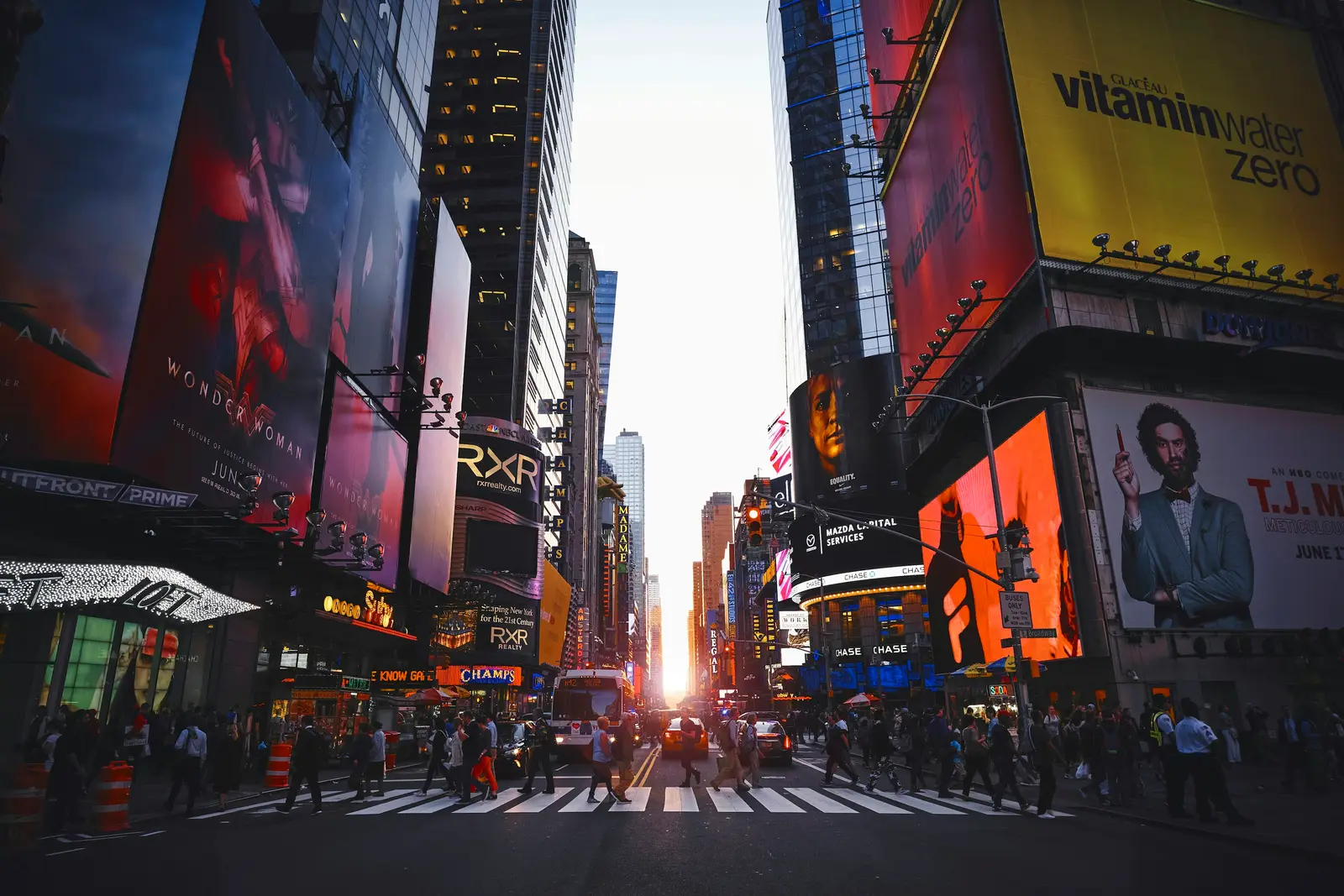
New York for the first time with kids is one of the most-searched phrases in family travel. It's also one of the most over-engineered trips people plan. The Statue of Liberty, Ellis Island, Times Square, a Broadway show, the MoMA, the Met, the Brooklyn Botanic Garden, a Yankees game, the High Line, an iconic pizza dinner. In four days. With a seven-year-old.
The thing that goes wrong is not picking bad places. It's picking too many. New York is a city where every block has something worth stopping at, and if you don't have a structure, you end up spending two hours of every day in transit between things that are further apart than they looked on the map.
Here's the structure that works: one neighborhood base, five anchors, and a plan to do one thing well rather than three things halfheartedly each day.
The neighborhood decision (do this first)
Before you book anything else, decide what neighborhood you're staying in and stay there. This decision shapes every other day.
Upper West Side (76th-86th Streets): The right base for kids under 10. Walking distance to Central Park, the American Museum of Natural History, the Children's Museum of Manhattan, Riverside Park, and a dozen casual restaurants that welcome children. Quieter than Midtown at night. Feels residential. The 1, 2, and 3 subway lines go everywhere from here.
Midtown West (Hell's Kitchen, 45th-55th): The right base for a family that wants Times Square in reach and easy subway access to Brooklyn and downtown. Louder, more tourist-facing, but central. Hotel rates are competitive for what you get.
Brooklyn, specifically Carroll Gardens or Park Slope: For families who want to feel like they're in New York rather than a tourist version of it. More space per dollar in apartments and hotels. Walking distance to Prospect Park, the Brooklyn Museum, and great food streets. Subway to Manhattan is 20-25 minutes. The right call for a second trip; slightly more navigational effort on the first.
Pick one and stop second-guessing it. The point is not to find the optimal location. It's to eliminate the variable of "where do we go today" before the trip starts.
Five places for a first trip
1. Central Park
Every first New York trip goes to Central Park and this is correct. The park is 843 acres of well-maintained green space in the middle of one of the densest cities in the world, and it's the best outdoor day in Manhattan for the money (free, plus whatever you spend on snacks).
For a first-trip approach: start at the south end at 59th Street and move north through the day.
The zoo at 64th Street is compact, takes 90 minutes, and has sea lions and snow leopards that hold up for any age. Continue to the Bethesda Fountain and Terrace (the big staircase and ornate fountain you recognize from a hundred movies). Row on the lake if your kids are old enough not to fall in trying to feed ducks. Walk up to the Great Lawn and sit for 20 minutes with no agenda.
Further north: the Conservatory Garden at 105th Street is the formal-garden section of the park, quieter, beautiful, and the only part of Central Park most visitors miss. Worth building into a morning.
The Reservoir loop (1.6 miles) is a paved path around the water: good for scooters, bikes (rentable at the 72nd Street park entrance), or a walking circuit that tires out kids productively.
Allow most of one day. The park is not something you "finish."
2. American Museum of Natural History
The natural history museum on Central Park West earns its reputation. The dinosaur halls, rebuilt and reopened in 2023, are excellent: the T. rex skeleton is mounted in a running pose that looks like it might turn, and the supporting interpretive material explains what we know versus what we're still inferring. Kids who care about dinosaurs will spend an hour here alone.
The Hall of Ocean Life, dominated by a 94-foot blue whale suspended from the ceiling, is the museum's most dramatic space. The Hayden Planetarium's space shows run about 25 minutes and pull kids in from the first minute, no fidgeting. The newer Gilder Center wing (opened 2023) adds a butterfly vivarium, an insectarium, and a materials science lab where visitors can handle fragments of meteorite.
Allow three to four hours. The museum is large enough that you won't see all of it, and trying to will leave you more tired than satisfied. Pick three or four halls and do them properly.
The museum is directly on the Upper West Side, making it a natural complement to Central Park in the same day or a follow-on the morning after.
3. Brooklyn Bridge and DUMBO
Walking the Brooklyn Bridge is the most film-and-television-referenced walk in New York and it still works. The pedestrian path crosses the full span from Manhattan to Brooklyn: about 30 minutes of walking at a normal pace, with views of the East River, the downtown Manhattan skyline, and, as you cross, an increasingly good view of the bridge's towers themselves.
Walk from Manhattan to Brooklyn (slightly downhill on average). In spring and fall, this is a pleasant walk rather than a test of heat tolerance or cold endurance.
What makes it a full half-day is DUMBO at the other end. DUMBO (Down Under the Manhattan Bridge Overpass) is the neighborhood between the two bridges: cobblestone streets, converted warehouses, a carousel in a glass pavilion, and Brooklyn Bridge Park running south along the waterfront with views back toward Manhattan.
Jane's Carousel at the waterfront is the best carousel in New York City: 48 horses, beautifully restored, running year-round in a pavilion designed by Jean Nouvel. $4 per ride. Worth the queue.
For lunch: Grimaldi's and Juliana's both serve coal-oven pizza within a block of each other (genuine quality argument, we'd go to Juliana's for reliability). Both have queues on weekends; go on a weekday or at 11:30 before the rush.
After lunch, walk or take an Uber back to Manhattan. The F or A train from High Street station crosses back under the river if legs are done.
4. Chelsea Market and the High Line
These two work together as a full morning or afternoon.
Chelsea Market is a repurposed factory in the Meatpacking District, now a covered food hall with about 35 vendors: the Lobster Place (fresh seafood counter, excellent fish tacos), Los Tacos No. 1 (best cheap tacos in the city, always a line, always worth it), the Hale and Hearty Soups counter, the Num Pang sandwich shop, an excellent Japanese grocery. For families, it is the best covered casual food option in Manhattan. No menu to translate, no sitting down required, everyone picks what they want.
The High Line entrance is half a block from Chelsea Market. The High Line is an elevated rail line converted into a public park: 2.3 km of landscaped walkway above the Meatpacking District, Chelsea, and Hell's Kitchen. Art installations along the route, good views west toward the Hudson and the Hudson Yards development, benches when small legs need a stop.
The High Line ends at 34th Street near Hudson Yards, where the Vessel (a climbable lattice structure) adds a 20-minute stop if your kids have any climbing instinct left. The viewing platforms are free; the staircase route is free. Bag check required for large strollers.
The combined Chelsea Market plus High Line half-day works as a late morning: eat at the market, walk north on the High Line, end at Hudson Yards, take a subway from 34th Street back to your base.
5. One museum pick (yours to make)
New York has more museums per square mile than almost any other city, and the right pick depends entirely on your kids. The four we'd put in front of most families:
- The Met (Metropolitan Museum of Art): Egypt and ancient world galleries, arms and armor, Impressionism. For kids 8+ with any art interest. Two to three hours minimum; the building is enormous.
- Intrepid Sea, Air and Space Museum: A World War II aircraft carrier converted into a museum, docked on the Hudson at Pier 86. Aircraft on the flight deck, a shuttle prototype, submarines. For kids who care about anything military or aerospace, it's a full day.
- Brooklyn Children's Museum (Crown Heights): The first children's museum in the world, opened 1899, entirely rebuilt in 2023. For ages 1-8, it is the best dedicated kid-museum in the city. Brooklyn-specific but worth the subway ride from the Upper West Side.
- 9/11 Memorial Museum (Lower Manhattan): For families with kids 10+. The outdoor memorial pools are moving at any age, but the underground museum includes material that is difficult for young kids to process. Remarkable; plan it deliberately, not as an afterthought.
Practical things, briefly
- Subway with kids: The NYC subway has elevators at some stations. The MTA accessible map is a real planning tool if you're managing a stroller. The Q line on Second Avenue (relatively new) has elevator access at most stations. Older lines (the 1/2/3 on the West Side, most lines south of 14th) are worse.
- Best seasons: April-May and September-October. The parks are beautiful, temperatures are 15-20°C, lines are shorter than summer.
- Museum admission: Many museums ask for "suggested admission" (the Met, the Natural History Museum) rather than a fixed price. New York residents pay less. Visitors are expected to pay the full suggested amount. Budget for it.
- Food budget: New York restaurant prices are not casual. Budget $80-120 for a family of four at a sit-down dinner. The Chelsea Market, the Ferry Building, and a deli lunch (any New York deli with a counter and a sandwich board) will save you significantly.
- Safety: Manhattan is safe for tourists. Normal urban vigilance (watch your bags on the subway). The only areas to avoid after dark with kids: parts of the South Bronx and East New York in Brooklyn.
What it costs you
New York with kids is expensive, and there is no hack for it. Hotels in Manhattan run $300-600 per night for a family room. Attractions add up. The subway is functional but not the stroller experience of Tokyo or Paris. The first trip with kids under 4 will involve more logistics than discovery.
If you have a toddler, New York is still worth doing, but lower your expectations for the museums and raise them for the parks, the neighborhoods, and the food. A two-year-old will not be moved by the Bethesda Fountain in the way a seven-year-old will. That's fine. Different parts of the trip land for different ages.
Read the full guide
The full New York family guide on FamiVentura includes age-specific picks for toddlers, kids, and teens; the complete 2-day and 5-day itineraries; and the survival guide for subway accessibility, restaurant reservations, and packing for a city where you will walk 8-10 km per day whether you planned to or not.
This article is free for members. Join FamiVentura to read it, plus get full access to age-specific guides, itineraries, and picks for every city.
More from the blog
Los Angeles or New York with kids? Picking a World Cup host city.
Both are hosting World Cup 2026 matches. One is built around a car and the outdoors, the other around a subway and density. Here's how to decide, with three anchors for each.
Toronto or Vancouver with kids? Both are hosting the World Cup.
Both are hosting World Cup 2026 matches and both work well with kids, but for different trips. Here's how to pick, with three anchors for each.
New York with kids in winter: the 5 picks that justify the cold
New York with kids works in winter if you build the trip around indoor anchors and pick the right outdoor moments. The five places we'd send a family to first.
Washington DC with kids: the city where the free museums are the best ones
DC's Smithsonian museums are free, world-class, and built for children. Here's how to use them, and the four-day plan that doesn't burn out before the Lincoln Memorial.
Free membership
Join the FamiVentura Community



- All our travel blogs, completely free
- Copenhagen and Osaka in full, including PDFs
- Handpicked free content for every destination
- The latest 10 Travellers' Picks, updated regularly
- Save favourite destinations and picks across all your trips
- Comments and community forums
No credit card. Just your email.
Comments
Sign in to leave a comment. Free for all members.
No comments yet. Be the first to share your thoughts.