San Francisco with kids: the 4-day plan that actually works
San Francisco rewards families who plan around its neighborhoods. The hills and the cold are real but manageable. Here's the four-day plan we'd run.
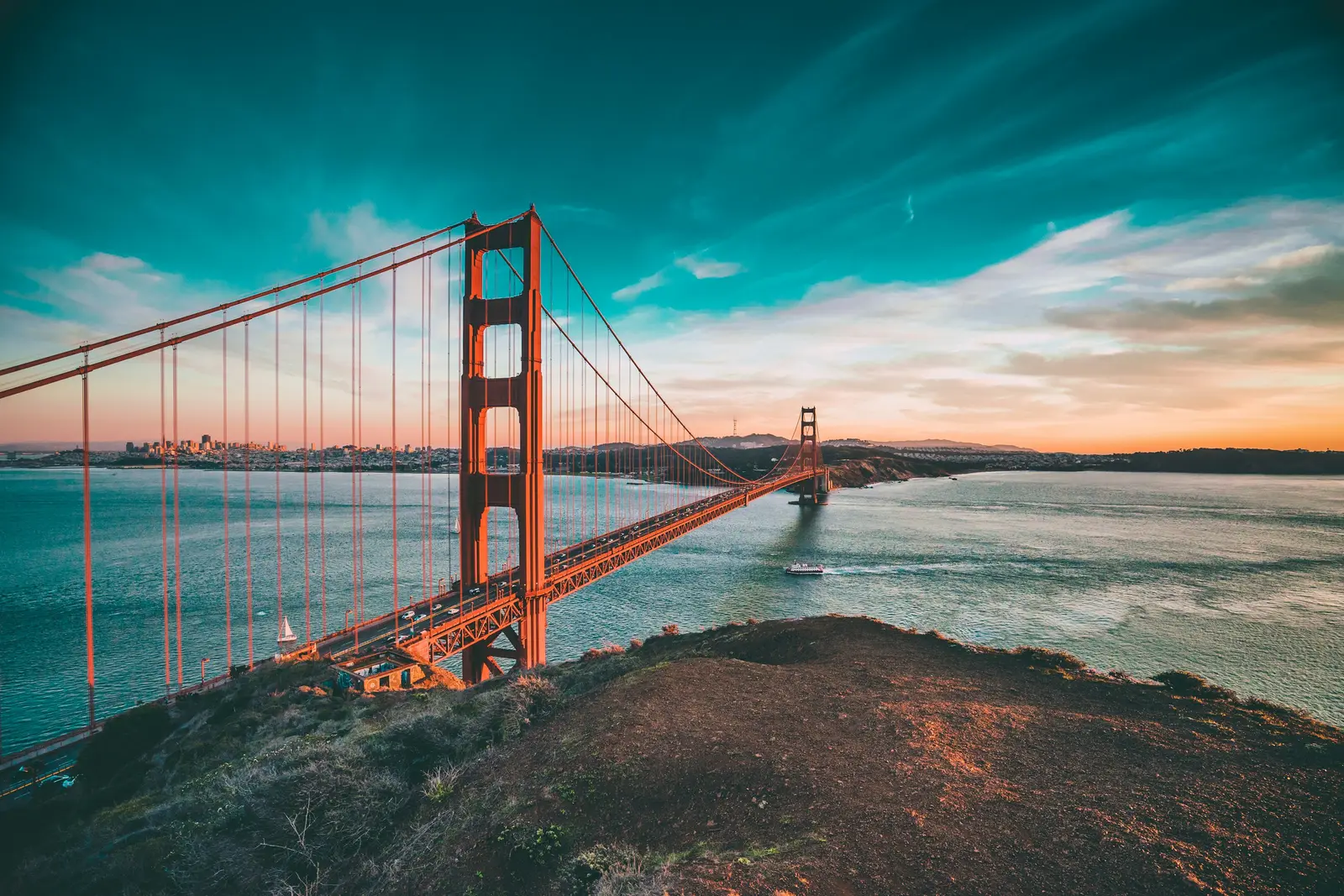
San Francisco has a reputation as a challenging city for families. Hills that exhaust strollers. Cold summers that surprise people in shorts. A tech-economy price tag on everything. Homeless encampments in parts of the downtown core.
All of that is accurate and none of it should stop you from going.
San Francisco is one of the most visually dramatic cities in North America. It has a hands-on science museum that is the best of its kind on the West Coast. It has an island prison you reach by ferry that kids talk about for years. It has a bridge so iconic that seeing it in person, from the water or from the headlands, is a genuine moment. The problems are real and manageable. The city pays you back.
Here's the four-day plan.
Day one: The Exploratorium
Start with the Exploratorium. It sets the tone and it's the strongest case for why San Francisco works with kids.
The Exploratorium at Pier 15 is a hands-on science museum that opened in its current waterfront location in 2013. About 650 interactive exhibits covering physics, biology, perception, and the natural world. The building itself, a converted historic pier on the Embarcadero, is spectacular, with floor-to-ceiling glass looking out onto the bay. Plan three to four hours. It holds up for adults.
What makes it different from the average science museum is the level of engineering behind the exhibits. The exhibit on depth perception (where you stick your head into a sphere and see yourself in false 3D), the giant fog ring generator, the pendulum wave machine, the tactile dome (a total-darkness crawl-through experience available by timed reservation): these are not panels of text with a button. They're demonstrations that require participation.
For ages 4-14, all day. For toddlers, the Tinkering Studio area has age-appropriate activities for under-5s, though a full day will be too long. Get a toddler out by noon.
Pre-book tickets online. Tuesday and Wednesday are the quietest days. The Thursday-evening after-dark sessions (18+) exist if you want adult time later in the trip while the kids stay at the hotel with one parent.
After the Exploratorium, walk or take a rideshare south along the Embarcadero to the Ferry Building.
The Ferry Building (every trip, any day)
The Ferry Building Marketplace is a landmark on its own: a 1898 building restored in 2003, now a farmers market and food hall on the Embarcadero waterfront. Not a theme park food experience: real produce stalls, Acme Bread, Cowgirl Creamery cheeses, Blue Bottle Coffee, a fish counter, oyster bars, and about fifteen other vendors.
On Tuesday, Thursday, and Saturday mornings, the outdoor farmers market extends onto the plaza and gets very good: heirloom tomatoes, fresh flowers, prepared foods to eat immediately. This is where San Franciscans actually shop.
For families, it's a lunch stop or a late-morning snack run. Buy bread and cheese and something made with Dungeness crab (the local specialty), eat on the outdoor seating with a bay view. Not expensive.
Day two: Fisherman's Wharf and Alcatraz
Fisherman's Wharf is the touristy part of San Francisco's waterfront, and it knows it. Most of it is souvenir shops and Boudin sourdough bread bowls that are okay. The Ghirardelli Square shopping complex is pleasant but not essential. What makes the Wharf area earn a full day is Alcatraz.
Alcatraz is the island prison in San Francisco Bay: operational from 1934 to 1963, briefly occupied by Native American activists in 1969, now a national historic landmark. The audio tour (voiced by former prisoners and guards) is one of the best audio guides we've encountered at any attraction, anywhere. The walk through the cell blocks, the solitary confinement area, the dining hall, the view from the recreation yard back toward the city: it is compelling for kids 8 and up, and for teenagers it's one of those experiences that actually holds their attention.
The ferry leaves from Pier 33, about a 10-minute walk from Fisherman's Wharf. Book well in advance (weeks ahead in summer) because it sells out. The crossing takes 15 minutes. Total time on the island: two to three hours. Return whenever you want (ferries run regularly). For kids under 7, Alcatraz is likely too intense and too much walking for the payoff; save it for older kids and spend the Wharf day differently.
After Alcatraz, walk back along the Wharf for clam chowder in a sourdough bowl at Boudin. It's a tourist cliche and correct.
Day three: The Golden Gate Bridge and Marin Headlands
Most families see the Golden Gate from a distance or drive across it. Walking it is better.
The pedestrian sidewalk runs along the east side of the bridge and is open from 5 am to 9 pm (April-October) or 5 am to 6:30 pm (November-March). The crossing is 2.7 km each way. Kids 6+ manage it. With small children, walk to mid-span (about 20 minutes) and turn back; mid-span gives you the view without committing to a full crossing.
For the best view of the bridge itself (which you can't see while you're on it), drive 10 minutes across to the Marin Headlands. The Hawk Hill overlook at the north end of the bridge is the postcard angle: the span in the foreground, the city behind, the bay in between. On clear days it's extraordinary. On foggy days the bridge is half-swallowed by cloud, which is its own kind of beautiful.
The Marin Headlands is also where you find the Marine Mammal Center, a nonprofit rescue and research facility with sea lions and seals in recovery enclosures. It is free, open most days, and takes about an hour. For kids with any interest in wildlife, it's the hidden highlight of a bridge day.
Lunch on the Marin side at the Cavallo Point Lodge overlooks the bridge. The casual restaurant is slightly expensive but the setting earns it.
Day four: Neighborhood morning + wrap-up
San Francisco's neighborhoods are its best unstructured feature. Choose one for a morning:
The Mission District (16th Street BART): Murals, taquerias, Dolores Park, the best burritos in the city. For the full taqueria experience: order a carnitas burrito from La Taqueria (cash only, perpetually crowded, worth every minute of the queue) and eat it in Dolores Park.
Chinatown and North Beach: The oldest Chinatown in North America, two blocks north of Union Square. Good dim sum at Gold Mountain or Hang Ah Tea Room. Then walk uphill through North Beach (the Italian neighborhood; stop at Vesuvio Cafe for the kids to look at, and City Lights bookshop) to Coit Tower for a view.
The Haight (Upper Haight): Victorian houses, independent shops, Buena Vista Park. More interesting for teenagers and design-aware parents than for small kids.
Noe Valley: The calm option. Stroller-friendly sidewalks, good coffee, a farmers market on Saturdays, a toddler park off 24th Street. Lower pressure than the tourist areas.
Practical things, briefly
- Weather: San Francisco's summer average high is about 17°C (63°F). Pack a fleece and a windproof jacket even in July. The fog is real; it clears most afternoons but mornings can be cold enough to surprise you.
- Hills: Strollers work fine in the flatter neighborhoods (the Embarcadero, the Mission, the Haight). Nob Hill and Russian Hill require planning or a cable car.
- Cable cars: They're slow, crowded, and expensive ($8 per ride), but a genuine San Francisco experience. The Powell-Hyde line gives the best hills and bay views. Ride it once for the experience and use Muni or rideshare for everything else.
- Getting around: Muni bus and metro cover most of the city. Rideshare (Uber, Lyft) is affordable. Avoid driving in downtown; parking garages are expensive and the one-way streets will confuse you the first day.
- Where to stay: Union Square for a central base; the Embarcadero area for walking distance to Exploratorium, Ferry Building, and Alcatraz pier; the Mission for character (but noisier at night).
- Safety: The Tenderloin (around Market and Sixth) and parts of SoMa are best avoided at night with kids. The waterfront, the Mission, North Beach, and the neighborhoods are all fine.
What San Francisco costs you
San Francisco is expensive at the level of New York, not the level of most US cities. A family of four in a reasonable hotel is $300-500 per night. Sit-down family dinners are $80-120. Budget by planning the Ferry Building lunch, grabbing burritos in the Mission, and treating the sit-down meals as the highlight rather than the default.
The Tenderloin and parts of downtown have visible homelessness and drug use that is harder to explain to kids than in other cities. It is not dangerous, but it is confronting. Stick to the neighborhoods and the waterfront and the issue mostly stays out of the way.
If you have a child who struggles with cold and fog, know that August in San Francisco can feel more like October than summer. Come in September or October when the weather is at its most reliably clear.
Read the full guide
The full San Francisco family guide on FamiVentura includes age-specific picks for toddlers, kids, and teens; the complete itinerary with the side trips we couldn't fit here, including the Muir Woods old-growth redwoods, the Monterey Bay Aquarium day trip, and the tech museum in San Jose; and the survival guide for the cable cars, the Muni, and the neighborhood restaurants.
This article is free for members. Join FamiVentura to read it, plus get full access to age-specific guides, itineraries, and picks for every city.
More from the blog
Los Angeles or New York with kids? Picking a World Cup host city.
Both are hosting World Cup 2026 matches. One is built around a car and the outdoors, the other around a subway and density. Here's how to decide, with three anchors for each.
Toronto or Vancouver with kids? Both are hosting the World Cup.
Both are hosting World Cup 2026 matches and both work well with kids, but for different trips. Here's how to pick, with three anchors for each.
New York with kids in winter: the 5 picks that justify the cold
New York with kids works in winter if you build the trip around indoor anchors and pick the right outdoor moments. The five places we'd send a family to first.
Washington DC with kids: the city where the free museums are the best ones
DC's Smithsonian museums are free, world-class, and built for children. Here's how to use them, and the four-day plan that doesn't burn out before the Lincoln Memorial.
Free membership
Join the FamiVentura Community

- All our travel blogs, completely free
- Copenhagen and Osaka in full, including PDFs
- Handpicked free content for every destination
- The latest 10 Travellers' Picks, updated regularly
- Save favourite destinations and picks across all your trips
- Comments and community forums
No credit card. Just your email.
Comments
Sign in to leave a comment. Free for all members.
No comments yet. Be the first to share your thoughts.