Tokyo or Kyoto with kids? Both. Here's the order.
Tokyo and Kyoto solve different problems on a Japan family trip. Here's how to combine them, with three picks for each city that anchor a 10-day plan.
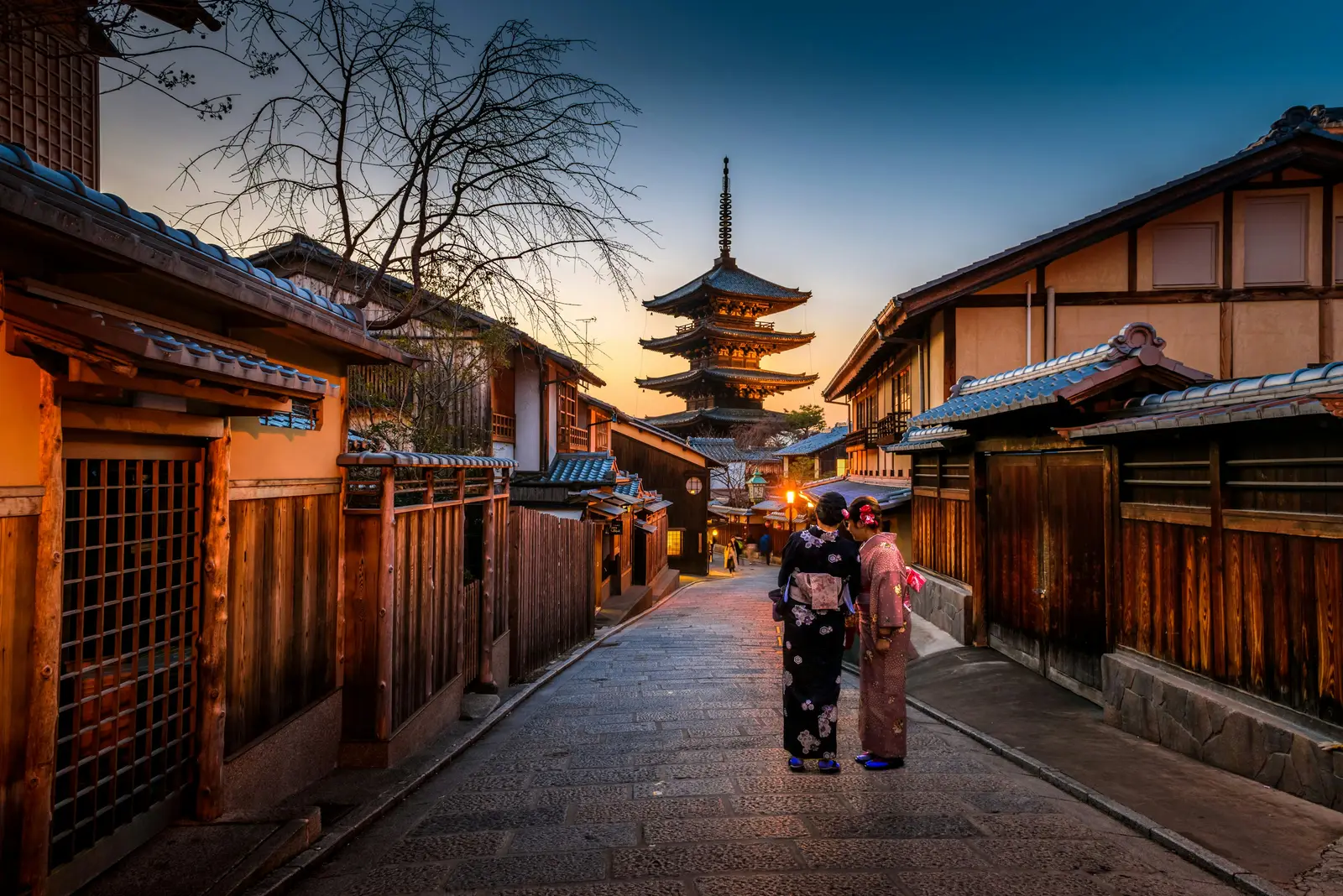
The Tokyo-or-Kyoto question is the wrong question. It is also one of the most-asked questions in our Tokyo guide.
The answer almost every family converges on after one trip is: both. Tokyo gives you the megacity, the variety, the conveyor-belt sushi, the kid-friendly weirdness. Kyoto gives you the temples, the slow food, the bamboo forest, the version of Japan that lives on postcards. Doing one without the other is missing half the country.
What matters is the order. Tokyo first, then Kyoto. Not the reverse. Here's why, and here's how to anchor each city with three picks if you have 8-10 days.
Why Tokyo first
Energy goes down on a long Japan trip, not up. By day 7 with kids, even a great family is fraying. Tokyo is the city that handles fraying badly: bright, loud, dense, sensory. Kyoto is the city that handles fraying well: quieter streets, walkable temples, dinners that end at 8 pm, fewer transit transfers.
If you arrive in Tokyo first, you hit it with maximum energy and absorb everything. Then Kyoto becomes the deceleration that puts the trip back together before flying home. Reverse the order and you face the steepest day of the trip (Tokyo at day 7) when nobody has the patience for it.
The other reason: Kyoto is best in the morning. Fushimi Inari at 7 am with no crowds is a different experience from Fushimi Inari at 11 am with five tour buses. After 4-5 days in Tokyo, your kids will be on Japanese time and willing to be up at 6:30. From day one, they won't.
Tokyo: three things that anchor a 4-5 day visit
These are not the only good things in Tokyo. They're the three we'd plan around if we had to choose.
1. Senso-ji Temple (and Asakusa)
Senso-ji is the oldest temple in Tokyo, with the famous red Kaminarimon gate, a long market street (Nakamise-dori) leading up to it, and the kind of crowd density that thrills kids who've never been somewhere this packed. It's not the most architecturally significant temple in Japan; that's Kyoto's job. But it's the right cultural anchor for Tokyo specifically because it shows kids how Japan can be both ancient and crammed into a megacity at the same time.
Go in the morning, around 8:30 am, before the tour buses. Buy each kid a souvenir from Nakamise-dori (kimono accessories, fans, kids' yukata). Eat ningyo-yaki (small filled cakes shaped like seven-lucky-gods figures). The whole stop is two hours.
2. Tsukiji Outer Market food stalls
Not the inner wholesale market (that moved to Toyosu in 2018), but the outer market that's still very much alive. Stalls selling tamagoyaki on a stick, fresh oysters, grilled scallops the size of your palm, mochi, and a hundred kinds of sushi. Walk through, eat one thing at every fourth stall, refuse to eat at the third stall because it has no queue.
Kids will try things they wouldn't touch in a restaurant because the format is street-food-by-pointing. We'd do this on day two as a late breakfast and wander the side streets toward Ginza after.
3. Tokyo Disneyland (or DisneySea, depending on the kids)
Disneyland-skeptics, hear us out. Tokyo Disneyland is different from the American or European versions. The cleanliness, the queue management, the cast members' commitment to the bit, and the food (chicken-shaped curry rice, popcorn flavors that don't exist anywhere else) make it a cultural experience as much as a theme park. Plan one full day. Pre-book. The rest of Japan is more authentic and less hectic, so this is the one day where you let the kids have their pure-fun reward.
For kids 8 and up, DisneySea (the more thematic, adult-leaning sibling) is the better choice. For kids under 8, classic Disneyland.
Kyoto: three things that anchor a 3-4 day visit
1. Fushimi Inari Shrine
Fushimi Inari is the iconic image of Japan: a hillside lined with thousands of vermilion torii gates winding up through cedar forest. Kids adore it. They run through the gates, count them, get lost in the side paths, find foxes (the shrine's symbol) carved at every junction.
The trick is timing. By 9:30 am the lower paths are choked with tour groups. By 7:30 am they are nearly empty. We'd recommend arriving at the JR Inari station at 7 am, walking the gates while you have them mostly to yourselves, and being back in central Kyoto by 10 am for breakfast. The shrine is open 24 hours and admission is free.
You don't need to climb to the top. The most photogenic stretch is the first 20 minutes. After that, the views are forest, the gates thin out, and small kids will ask why we're still walking.
2. Arashiyama Bamboo Forest and Iwatayama Monkey Park (combine them)
Arashiyama is the bamboo grove every Japan article references. It's beautiful, it's also crowded, and on its own it's a 15-minute photo stop, not a half-day. The trick is to combine it with Iwatayama Monkey Park, a 20-minute uphill walk away.
The monkey park is on top of a hill with about 120 free-roaming Japanese macaques and a panoramic view of Kyoto. Kids feed them peanuts through a wire enclosure (humans inside, monkeys outside, a delightful inversion of the standard zoo concept). It's the best animal experience in Japan with kids that doesn't involve a long drive.
The combined Arashiyama + monkey park trip is a half-day, including travel from central Kyoto. We'd do it on day two or three. The walk up to the monkey park is steep; younger kids may need to be carried for the last 10 minutes.
3. Nishiki Market
Nishiki Market is Kyoto's covered five-block-long food street. Like Tsukiji but Kyoto-specific: yuba (tofu skin), traditional preserves, wagashi (traditional sweets), green tea everything, octopus on a stick with a quail egg tucked inside. The good vendors have queues; queue with locals. Avoid the obvious souvenir stands; everything sold there is in every airport gift shop.
We'd do Nishiki as a late breakfast or lunch on a city day. It pairs with a walk through the Pontocho alley afterward. With small kids, an hour is plenty.
Logistics: the train between
Tokyo to Kyoto is a 2 hour 15 minute Shinkansen ride on the Nozomi. Pre-book seats; with kids, you want reserved seats with the larger luggage rack. The 7-day Japan Rail Pass raised prices significantly in October 2023 (a 7-day pass is now ¥50,000), so for a Tokyo-to-Kyoto round trip you may now do better buying point-to-point Shinkansen tickets directly. Check the math; it depends on your specific itinerary.
If you do use the pass, you can now ride the Nozomi by paying a supplement (about ¥4,960 each way). Without the supplement, take the Hikari (slightly slower, no extra fee for pass holders). Either way: ekiben (train station bento boxes) for the journey are themselves a kid highlight.
Practical things, briefly
- Where to stay in Tokyo: see our Tokyo with toddler post. Shibuya or south Shinjuku.
- Where to stay in Kyoto: near Kyoto Station for transit access, or Higashiyama for the temple-walk experience. Avoid the south of the city; you'll lose 20 minutes per outing.
- Currency: bring a Suica or Pasmo IC card, top it up at any station. Use it for trains, buses, vending machines, and convenience stores.
- Toilets: every train station, every park, every department store. The cleanest country we've taken kids to.
Where this trip gets hard
Eight to ten days in Japan with kids is a real ask. Even with optimal pacing, jet lag is brutal coming from Europe or the US East Coast. The first three days will involve 4 am wake-ups. Build the first three days as Tokyo days, not Kyoto days; you can absorb a 4 am wake-up in Tokyo by walking to Tsukiji for breakfast at 5 am, but in Kyoto everything you want to see is closed until 6 am minimum.
If your kid is at the worst phase of motion sickness or hates trains, the Shinkansen is fine but Kyoto's bus system (the most efficient way to reach the temples) is bumpy. Consider taxis for in-Kyoto trips with sensitive kids; they're more available and more affordable than Tokyo taxis.
If you can only do one city, pick Tokyo for kids under 7 and Kyoto for kids 10+. The middle range (7-10) does well in either, but Tokyo offers more "what is happening" novelty per day, and Kyoto offers more depth per place.
Read the full guides
The full Tokyo guide on FamiVentura covers the entire 5-day plan with age-specific picks and the survival guide of trains, conbini food, and Tokyo etiquette. The full Kyoto guide covers the temple-by-temple walking routes, the food map, and the Nara day trip we couldn't fit here.
Open the Tokyo family guide on FamiVentura. · Open the Kyoto family guide on FamiVentura.
More from the blog
How to actually sleep on a long-haul flight when your kid is on you
The toddler is asleep, on you. You can't move. You can't lean forward. Here's the gear and the approach that lets you actually sleep in that position.
Europe or Asia for your first family trip? How to actually choose
The Europe vs Asia question for a first family trip isn't about which continent is better. It's about which set of trade-offs fits the family you actually have.
Long-haul flight with a toddler: the version that actually works
A 10-hour flight with a 2-year-old is its own discipline. Here's the checklist we built after enough trips that the toddler part stopped being the hard part.
Bangkok with a toddler is more doable than you think
Most travel writing tells you Bangkok is too much for a 1-3 year old. We disagree. Here's the version that actually works, anchored on three places.
Free membership
Join the FamiVentura Community
- All our travel blogs, completely free
- Copenhagen and Osaka in full, including PDFs
- Handpicked free content for every destination
- The latest 10 Travellers' Picks, updated regularly
- Save favourite destinations and picks across all your trips
- Comments and community forums
No credit card. Just your email.
Comments
Sign in to leave a comment. Free for all members.
No comments yet. Be the first to share your thoughts.