Why we love Osaka with kids (and why it's not just 'cheaper Tokyo')
Osaka gets compared to Tokyo like it's a consolation prize. It isn't. Here's what it actually offers families, and the three places that make the case.
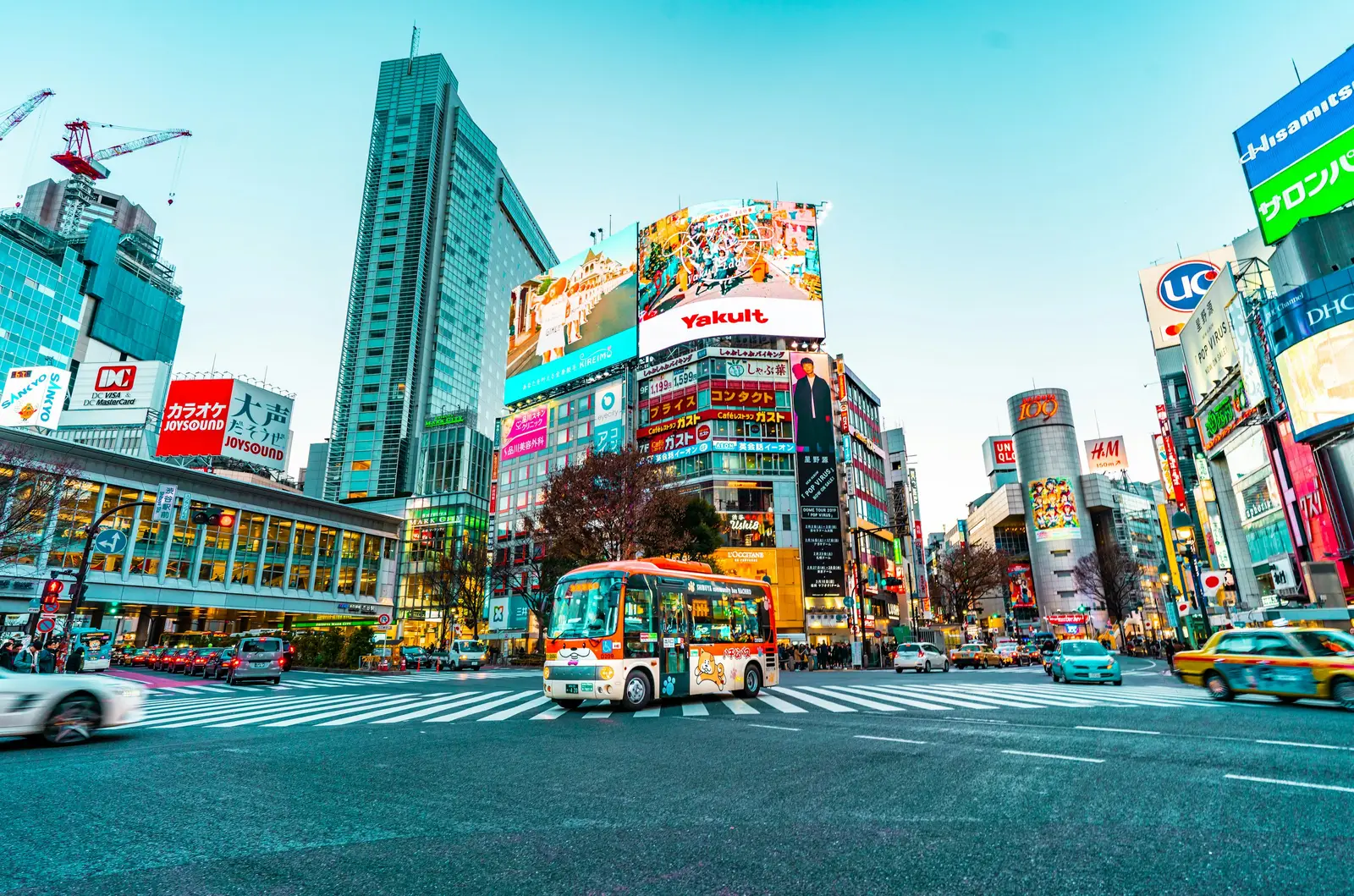
The way people talk about Osaka in the context of a Japan family trip is usually some version of: "We're doing Tokyo and Kyoto, and we might spend a night in Osaka on the way." Osaka as a stopover. Osaka as the affordable alternative. Osaka as the city you add to the itinerary if you have extra time.
This is wrong, and families are the ones who suffer most for it.
Osaka is not a cheaper Tokyo. It has a distinct identity that Tokyo doesn't share and that turns out to work better for families in some specific and underappreciated ways. Here's why we keep sending families there on purpose, not as a detour.
The food is the reason to go, and it's not like anywhere else
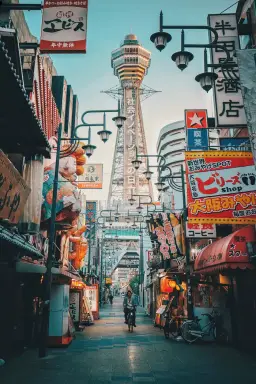
Osaka has a phrase, kuidaore, which translates roughly as "eat until you drop" or "spend all your money on food." The city took this as a civic project. Osaka's street food culture is not a tourist amenity; it's how people there actually live. Restaurants competing for attention, vendors shouting from doorways, the smell of takoyaki (grilled octopus balls) and kushikatsu (skewered deep-fried everything) drifting across intersections.
Dotonbori, the neon-lit canal street in Namba, is the most sensory street-food experience in Japan for families. Every few meters: a new option. Takoyaki made in eight-ball iron molds in front of you. Gyoza fresh from the pan. Okonomiyaki (savory pancakes layered with cabbage, pork, and bonito flakes) cooked on a griddle at your table. Ice cream in flavors that don't exist in other countries. Ramen counters where you order from a vending machine and eat at a six-seat counter while the chef pulls noodles.
The reason this works better with kids than in Tokyo is the format. Tokyo's restaurants are sit-down, often formal, sometimes reluctant about children, frequently confused by dietary questions. Osaka's street food is point-and-eat. Kids point at things. You say yes or no. They eat something they'd never have tried if it were on a menu. The food problem on a Japan trip, managing picky eaters through Japanese menus, basically dissolves in Osaka.
Plan an evening in Dotonbori as a family dinner that's not really dinner. Walk from the Shinsaibashi shopping arcade south to the canal, eat one thing every five minutes for 90 minutes, end the night with a taiyaki (fish-shaped waffle stuffed with red bean or custard) from a street vendor and let the kids pick the flavor. This is a top-five family dining experience in Asia.
Osaka Castle holds up
Osaka Castle is the other anchor, and it earns its reputation more quietly than its photograph suggests.
The castle you see (white and green, five-story keep, floating above the trees) is a 1931 reconstruction of the 16th-century original, with an interior rebuilt in 1997 as a museum. Normally this would be a caveat. Here it's largely irrelevant, because the museum inside is engaging (Sengoku period history, scale models of the battles, replica armor kids can touch), the observation deck on the eighth floor is excellent, and the castle grounds themselves, Nishinomaru Garden in particular, are worth an hour of just existing under the trees.
The context for kids: this is the castle that Toyotomi Hideyoshi built when he unified Japan in the 1580s. The summer battles for the castle in 1615 ended the last real challenge to Tokugawa rule. The history is violent, large-scale, and legible to children in the way European medieval history is: armies, sieges, betrayal, a general who lost the war after almost winning it. For kids 8+, the museum does this well.
Plan a morning here: arrive when it opens at 9 am, do the museum and the grounds in two to three hours, then walk south to Namba and transition to the afternoon in Dotonbori.
Practical note: the castle grounds entry is free. The museum inside the keep costs ¥600 per adult (kids free). Skip the castle shop; it's standard.
Universal Studios Japan is the strongest theme park in Asia
This is the one most families already know, but it's worth stating plainly: Universal Studios Japan in Osaka is the best theme park in Asia, including Tokyo Disneyland.
Super Nintendo World alone justifies this. The interactive wristband-enabled area, where you're literally playing a Mario game through the physical space, collecting coins by punching question blocks, battling Bowser Jr., is the most immersive theme park experience currently operating anywhere in the world. Adults who are not Nintendo fans find it impressive. Adults who grew up with Mario find it overwhelming in the best way.
Beyond Nintendo World: the Wizarding World of Harry Potter (the Hogwarts Express, Butterbeer, all of it), Jurassic World, Minion Park, and the Jaws-era Universal Studios nostalgia of Waterworld. The park skews slightly older than Tokyo Disneyland (better for kids 7+ than Tokyo's 4-7 demographic), and the energy is louder and more theme-park intense than Kyoto's temples.
Pre-book tickets and express passes well in advance; the Nintendo World timed entry fills up for morning slots two months ahead. Plan a full day. It earns it.
What Osaka does that Tokyo doesn't
It's navigable. Osaka's Namba-Shinsaibashi-Dotonbori area is a compact, walkable few blocks with everything in reach. Tokyo rewards deep knowledge of its 23 wards; Osaka rewards just showing up.
It's louder and less formal. Tokyo can feel like a city with rules you don't fully understand. Osaka feels like a city that wants you to enjoy yourself and will help. Restaurant staff will engage with your kids. Shopkeepers will come out to show them something.
The day trips are extraordinary. Nara is 45 minutes away by express train: a 1,300-year-old city with wild deer that wander among the temples and will eat crackers from your hands (and sometimes your hat). Kyoto is 15 minutes by Shinkansen. Universal Studios is within the city. Osaka is the best-positioned city in Japan for day trips, and families who base themselves here rather than in Kyoto often have better overall trips because they're trading temple-walk proximity for activity range.
When Kyoto is the better call
If your children are at the specific age and interest level for traditional Japanese culture (temples, tea ceremonies, historical sites), Kyoto is a better base. Osaka's historical layer is real but the city leans toward commerce and food over contemplation. The right comparison is Osaka for energy, Kyoto for depth.
Osaka summers are hot (August can hit 35°C with humidity). The spring (March-April) and autumn (October-November) windows are the best times for active outdoor days.
The street food in Dotonbori is mostly fried. This is not a problem until it is. Build in at least one sit-down restaurant dinner for the trip.
Read the full guide
The full Osaka family guide on FamiVentura covers age-specific picks for toddlers, kids, and teens; the complete Universal Studios planning guide; the Nara day trip in detail; and the food map of Dotonbori and the covered shopping arcades. The Kyoto guide and the Tokyo guide are both paired with Osaka if you're building a longer Japan trip.
This article is free for members. Join FamiVentura to read it, plus get full access to age-specific guides, itineraries, and picks for every city.
More from the blog
How to actually sleep on a long-haul flight when your kid is on you
The toddler is asleep, on you. You can't move. You can't lean forward. Here's the gear and the approach that lets you actually sleep in that position.
Europe or Asia for your first family trip? How to actually choose
The Europe vs Asia question for a first family trip isn't about which continent is better. It's about which set of trade-offs fits the family you actually have.
Long-haul flight with a toddler: the version that actually works
A 10-hour flight with a 2-year-old is its own discipline. Here's the checklist we built after enough trips that the toddler part stopped being the hard part.
Bangkok with a toddler is more doable than you think
Most travel writing tells you Bangkok is too much for a 1-3 year old. We disagree. Here's the version that actually works, anchored on three places.
Free membership
Join the FamiVentura Community
- All our travel blogs, completely free
- Copenhagen and Osaka in full, including PDFs
- Handpicked free content for every destination
- The latest 10 Travellers' Picks, updated regularly
- Save favourite destinations and picks across all your trips
- Comments and community forums
No credit card. Just your email.
Comments
Sign in to leave a comment. Free for all members.
No comments yet. Be the first to share your thoughts.