Osaka and Kyoto with kids: the 4-day plan that uses both
Osaka and Kyoto are 15 minutes apart by Shinkansen and solve different problems on a Japan trip. Here's the four-day plan that uses both properly.
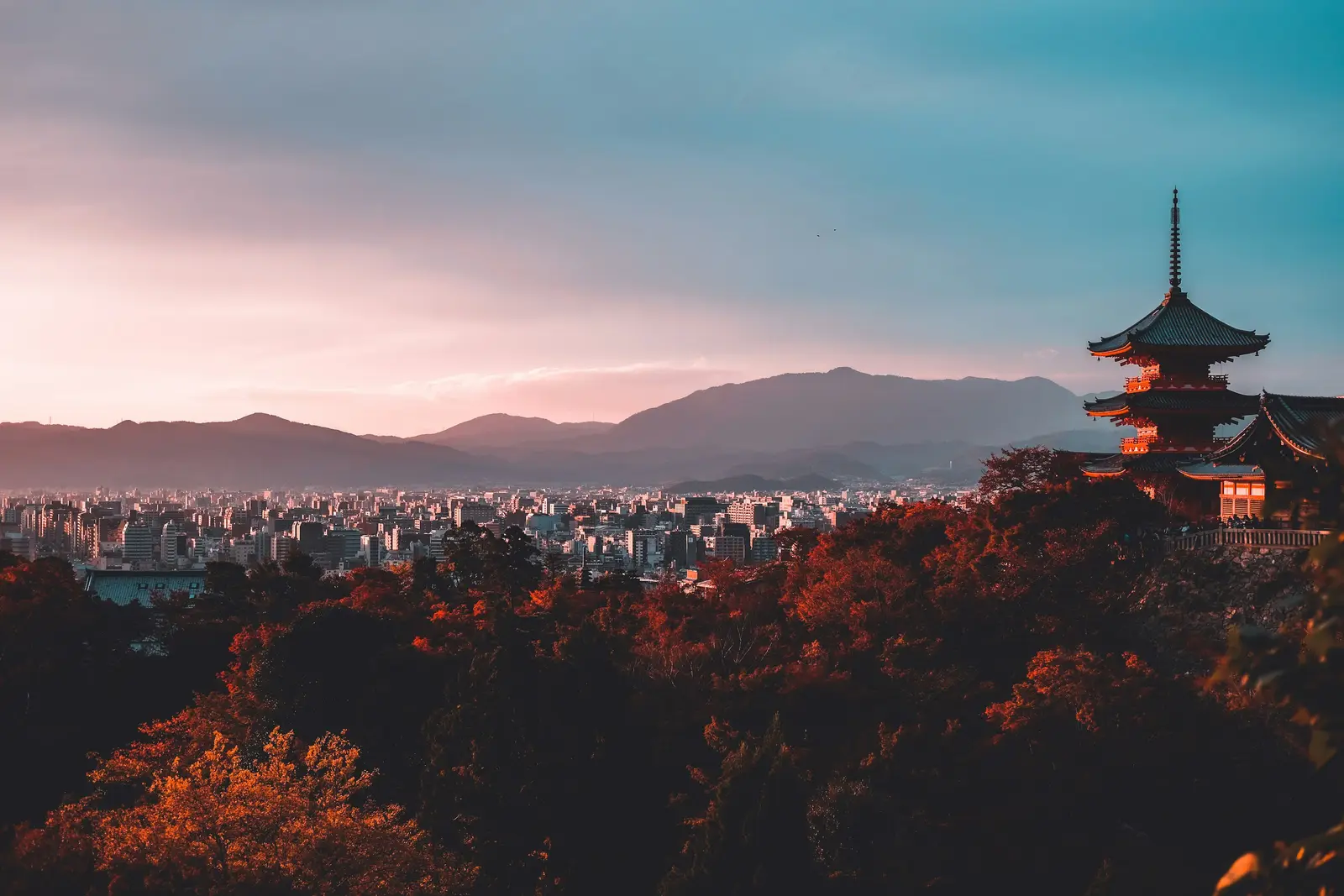
The most common question in the Osaka and Kyoto guides on FamiVentura is some version of: "We only have four days: which one do we pick?"
The answer is: you do not pick. They are 15 minutes apart by Shinkansen. A four-day trip with two nights in each city is entirely practical. You pack once, move once, and come home having done a food-and-entertainment city and a temple-and-culture city without sacrificing either.
Here's the plan.
Why two nights each, not more of one
The asymmetry most people expect to find (that one city needs more time than the other) doesn't really hold up on a family trip.
Osaka's kid anchors are Universal Studios (one full day, very full) and the Dotonbori food strip (half a day if you do it right). You can add Osaka Castle on a morning. That's two comfortable days. Staying a third night in Osaka means a repeat-visit day, which works if you're very into theme parks or street food and not at all for everyone else.
Kyoto's kid anchors are Fushimi Inari, Arashiyama (bamboo plus monkeys), and Nijo Castle. You can add Nishiki Market and a temple walk through Higashiyama. That's also two days, done well. Staying a third night in Kyoto means a slower pace or a longer Nara day, which is nice but not essential.
Two nights each is the clean answer. It also means one packing day, which with children is more meaningful than it sounds.
The four-day plan
Night one and two: Osaka
Arrive in Osaka, check in near Namba or Shinsaibashi. The area around Namba station is the most central base in Osaka: walking distance to Dotonbori, the covered shopping arcades, and subway access to Universal Studios.
Osaka day one: Universal Studios Japan
This is a full day with no other agenda. Universal Studios Japan in Osaka is the strongest theme park in Asia: Super Nintendo World, the Wizarding World of Harry Potter, Jurassic World, Minion Park. Plan to arrive at open (usually 9 am). Pre-book both regular tickets and an express pass, and pre-book the Nintendo World timed entry separately: morning slots fill months ahead.
For kids 5 and up, this is a complete day. Younger kids can manage it but will tire by 2 pm; have a plan to exit early without guilt if needed.
The park is at Universal City station, four stops from Namba on the JR Yurakucho line. Door to gate: 15 minutes.
Osaka day two: morning at Osaka Castle, evening in Dotonbori
Split the day.
Morning: Osaka Castle and Nishinomaru Garden. Arrive at 9 am when it opens. Two to three hours for the museum inside the keep and a walk through the garden. The castle grounds are free; the museum entry is ¥600 per adult, kids free. End the morning at the castle's outdoor café, which has a view of the keep that the interior doesn't match.
Afternoon: rest at the hotel. This is not optional advice. Two active days in a row in Japan with children demands a midday break.
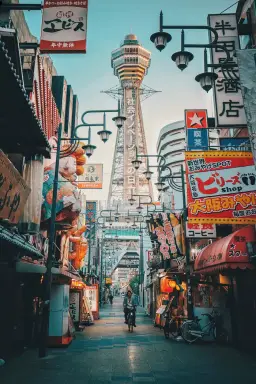
Evening: Dotonbori. Walk out of your hotel around 6 pm and eat your way south to the canal. Takoyaki from a street vendor with a queue (the queue means the octopus is fresh). Gyoza. Okonomiyaki at a counter restaurant where you watch it assembled at the table. Ice cream at a shop with a sign you can't read but that everyone else is holding. Ramen if anyone has room. You're not ordering food; you're pointing at food. Kids under 10 find this format easier than any restaurant experience in any Western city.
Budget for a slow 90-minute evening. This is the Osaka memory.
Night three and four: Kyoto
Move to Kyoto on day three. The Shinkansen from Shin-Osaka to Kyoto is 13 minutes. With children and luggage, budget an hour door-to-door.
Where to stay: near Kyoto Station for subway access and easy Nara connections, or in Higashiyama for the historic-neighborhood experience (quieter, prettier, more walking to reach things).
Kyoto day one: Fushimi Inari and Nijo Castle
Start early. Fushimi Inari, the shrine with thousands of orange torii gates winding up through forest, is magnificent at 7 am and crowded at 10 am. The JR Inari station is two stops from Kyoto Station; the commute is 5 minutes. Arrive before 8 am if you can. Walk the first section (the most photogenic stretch takes about 20 minutes) and return to central Kyoto by 10 am for breakfast.
Afternoon: Nijo Castle. Nijo is a different kind of Kyoto history than the temple circuit: it is a military and political building, the Shogun's Kyoto residence, with the famous "nightingale floors" (floorboards engineered to squeak, so no one could walk silently through the corridors). The interior rooms contain original painted sliding panels from the 17th century. Kids 7+ who have any tolerance for history find the nightingale floors immediately compelling and the painted panels beautiful. The garden is a separate section worth 30 minutes. Entry is ¥800 per adult, ¥400 per child.
Evening: Nishiki Market for a late-afternoon food walk, then dinner in central Kyoto.
Kyoto day two: Arashiyama and the monkey park
This is the Kyoto day families remember.
Arashiyama is the bamboo grove 30 minutes west of central Kyoto. The bamboo grove itself is famous enough to be crowded by mid-morning, and on its own it's a 20-minute walk, not a destination. What makes it a full morning is what you combine it with.
Iwatayama Monkey Park is a 20-minute uphill walk from the Togetsu-kyo Bridge at the base of Arashiyama. About 120 free-roaming Japanese macaques on a hillside, with a panoramic view of Kyoto in the distance. The trick: inside the enclosure at the top, humans buy peanuts and feed the monkeys through wire mesh. The animals are outside the fence. The humans are inside. The inversion (you're in the cage, the monkeys are free) delights children reliably regardless of age.
The walk up is steep and takes 20 minutes; carry toddlers for the last section. The views from the top are the best you'll get of Kyoto from any point outside the central districts.
Plan the combined Arashiyama + monkey park trip as a morning, starting with the bamboo grove at 7:30 am, up to the monkeys by 9, back down for lunch in Arashiyama town by noon. The walk back through the bamboo grove is less crowded than your arrival.
Optional afternoon add: the Tenryu-ji temple garden, which is the best Zen garden in Kyoto for families because it has a pond, reflecting trees, and enough visual drama to hold attention without requiring prior knowledge of Zen garden design. Entry ¥500 for the garden, ¥300 additional for the temple interior.
The Nara option
If you have any flexibility in your schedule, build a Nara day into the four days, either by extending to five nights or by using a day in Osaka as a Nara day before moving to Kyoto. Nara is 45 minutes from Osaka by express train and 45 minutes from Kyoto; it works from either base.
Nara's deer are the reason. Over 1,000 wild sika deer roam freely around Nara Park and the temple grounds. They actually bow for crackers (they've learned that bowing gets a reward) and will eat from hands. They are also surprisingly large for children expecting Bambi: adults are sometimes startled. The approach to Todai-ji (the enormous bronze Buddha temple) passes through deer on both sides of the path.
For kids under 12, Nara generates the most photographed moment of any Japan trip. Allow half a day.
Practical things, briefly
- Shinkansen between Osaka and Kyoto: The Hikari takes 17 minutes from Shin-Osaka to Kyoto. The Nozomi takes 13 minutes. Both require a reserved seat with kids; book at the station or via SmartEX app. If you have a Japan Rail Pass, check whether it covers the specific train you're taking.
- IC card: Get a Suica or ICOCA card at any major station. Load it with credit. It covers trains, subways, buses, and convenience store purchases across both cities.
- Best time to go: Spring (late March to early May) for cherry blossoms; autumn (October-November) for fall color. Both are crowded but spectacularly worth it. Summer (July-August) is very hot and humid. Winter is mild and uncrowded.
- Universal Studios tickets: Buy at least two weeks ahead for regular tickets, four to six weeks ahead for Nintendo World timed entry in peak season.
- Fushimi Inari timing: The shrine is open 24 hours and has no entry fee. The gate is lit at night, which is beautiful and also means night visits are possible if your kids run early.
Where four days runs out of slack
Four days is not quite enough to feel unhurried in either city. If you try to do both in four days, you will feel the tightness on the last morning. The trade-off is that you come home having seen both, and in our experience that is better than coming home regretting the one you skipped.
If you extend to five or six nights, add a night in Kyoto and use the extra day for Arashiyama at a slower pace, or add the Philosopher's Path and Nanzen-ji temple walk. If you extend on the Osaka side, add a second Universal day or a night in Nara.
Read the full guides
The full Osaka guide covers the Universal Studios survival guide, the Dotonbori food map, and the Nara day trip logistics. The full Kyoto guide covers all the temple walking routes, the food guide, and the day trips we couldn't fit here.
Open the Osaka family guide on FamiVentura. · Open the Kyoto family guide on FamiVentura.
This article is free for members. Join FamiVentura to read it, plus get full access to age-specific guides, itineraries, and picks for every city.
More from the blog
How to actually sleep on a long-haul flight when your kid is on you
The toddler is asleep, on you. You can't move. You can't lean forward. Here's the gear and the approach that lets you actually sleep in that position.
Europe or Asia for your first family trip? How to actually choose
The Europe vs Asia question for a first family trip isn't about which continent is better. It's about which set of trade-offs fits the family you actually have.
Long-haul flight with a toddler: the version that actually works
A 10-hour flight with a 2-year-old is its own discipline. Here's the checklist we built after enough trips that the toddler part stopped being the hard part.
Bangkok with a toddler is more doable than you think
Most travel writing tells you Bangkok is too much for a 1-3 year old. We disagree. Here's the version that actually works, anchored on three places.
Free membership
Join the FamiVentura Community


- All our travel blogs, completely free
- Copenhagen and Osaka in full, including PDFs
- Handpicked free content for every destination
- The latest 10 Travellers' Picks, updated regularly
- Save favourite destinations and picks across all your trips
- Comments and community forums
No credit card. Just your email.
Comments
Sign in to leave a comment. Free for all members.
No comments yet. Be the first to share your thoughts.